Peptide Purity Evaluation Solution
Peptide Pureness & Quantitation Testing
While peptide purity isn't the only factor, using inadequately identified reagents is a recognized factor to irreproducible results. For a 10-residue peptide with 99.5% coupling performance, you 'd anticipate concerning 95% of the end product to be the unabridged series before purification. For a 30-residue peptide at the exact same efficiency, that drops to roughly 86%. This is why much longer peptides are more difficult to generate at high pureness and commonly cost even more. Pureness is the percentage of books in the delivery that have every page printed appropriately, in the appropriate order, without any missing out on phases and no additional web pages packed in. A 95% pureness means that out of every 100 "publications" in your batch, 95 are excellent copies and 5 have some type of error.
Choosing the appropriate exterior lab for peptide screening includes examining several aspects. A trusted laboratory ought to have verifiable experience in peptide chemistry evaluation-- as an example, PhD-level chemists or biochemists on team that comprehend peptides' synthesis and destruction pathways. Certification by appropriate bodies (such as ISO/IEC or qualification for GLP/GMP compliance) is a strong indicator of top quality.
Nanoparticle Physicochemical Home Evaluation
Make-up & Content
Straight from the synthesizer with minimal handling-- typically just bosom from the resin and precipitation. Pureness varies widely, from 40% to 80%+ depending on series length and problem. Unrefined peptides are suitable for applications where purity isn't critical, such as antibody production or initial testing assays where the target peptide simply needs to be existing, not dominant. Carefully connected to truncations, removal peptides are full-length chains that are missing one amino acid somewhere in the middle. If topping isn't flawlessly efficient, an uncoupled chain can continue to lengthen in succeeding steps, producing a peptide that's just one deposit short of the target.In simple terms, a peptide provided as 95% pure consists mainly of the target peptide (95%), with the remaining ~ 5% composed of impurities. These contaminations can include things like reduced or trimmed sequences, removal variants, oxidized residues, or other minor side-products from the synthesis procedure. Peptides are extensively used in the medical visual appeals, cosmetics, and biomedical fields as a result of their one-of-a-kind organic task and broad application potential. Nonetheless, the top quality of peptide products straight influences their performance and safety, making exact quality screening services important.
The dissolved peptide example is infused into a stream of liquid solvent (the mobile stage) that moves via a tube loaded with tiny bits (the Click for more info stationary phase). Various molecules "stick" to those bits with various staminas, so they travel with the column at different speeds. Refined differences in basic material purity and framework can lead to incongruities in the activity of the final product.- This overview breaks down what purity really means in peptide chemistry, exactly how it's measured, what the contaminations are, and exactly how to check out the documents that shows a peptide is what it claims to be.
- HPLC separates a blend right into its private components based upon how each molecule communicates with a particularly designed column.
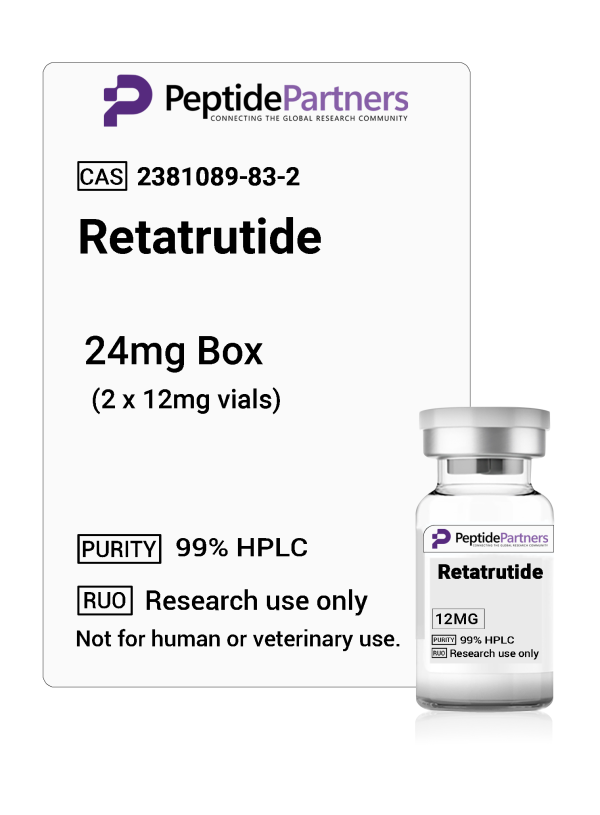
- For instances of product-level context, compare the expected masses for Retatrutide, BPC-157, and Semaglutide.